
Is ViaBTC TX Accelerator Worth Using for Slow Bitcoin Transactions?
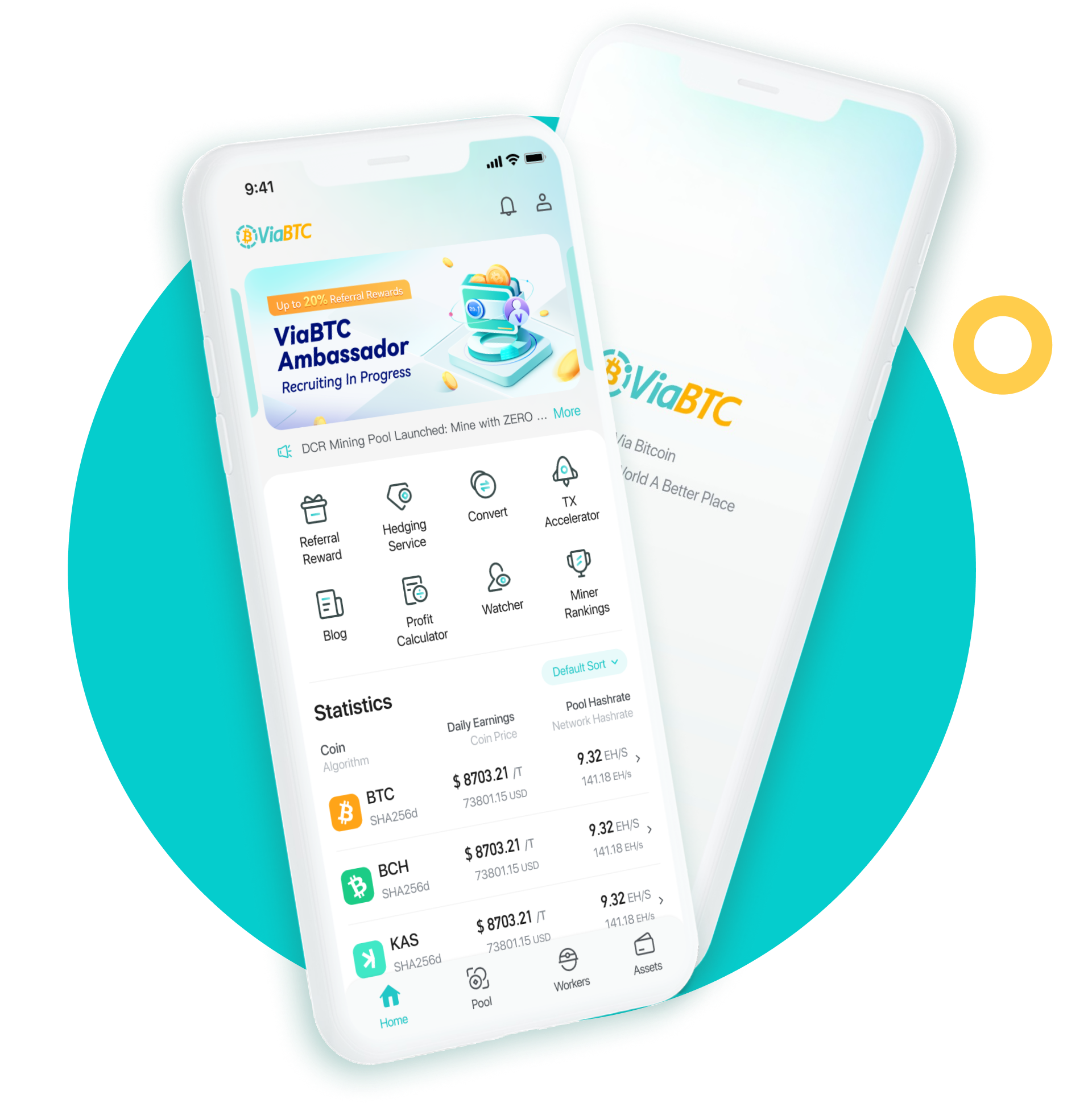
ViaBTC TX Accelerator can be worth using when a Bitcoin payment is already unconfirmed, the fee rate is below current miner preference, and normal fee-bumping is unavailable. ViaBTC’s published rules set free submissions at no more than 0.5 KB and at least 0.0001 BTC/KB, while its 2024 help documentation lists 20 free requests per hour. The live accelerator page can show a different quota, including 0 available slots. Paid acceleration extends prioritization to cooperating mining pools, but confirmation time is not guaranteed and payments are non-refundable. For urgent transfers, the comparison should be acceleration cost versus the financial cost of waiting.
Bitcoin transactions are not processed strictly in the order they arrive. Miners build block templates from transactions available in their mempools and generally favor combinations that produce higher fees per unit of block space. Bitcoin has operated with this fee market since its early years, and the limited capacity of each block makes low-fee payments more exposed when demand rises. A transfer broadcast during a quiet period can therefore remain pending after newer payments arrive with higher fee rates.
The difference can become large without anything being wrong with the payment. If a wallet sends at 5 sat/vB and later demand moves toward 30 sat/vB, competing transactions are paying about 500% more per virtual byte. The lower-fee payment remains valid, but miners have a financial reason to select other transactions first. Waiting may solve the problem when mempool demand falls; acceleration becomes more relevant when the recipient needs confirmation within a shorter period.
ViaBTC approaches the problem from the miner side. A user submits the transaction ID, and an accepted transaction receives preferential treatment in ViaBTC’s block-building process. The ViaBTC Mining Pool can place an accepted transaction into a block template without requiring the user to recreate the original payment. The service therefore differs from websites that merely rebroadcast raw transaction data to additional Bitcoin nodes.
Acceleration changes how participating miners treat a pending transaction; it does not change Bitcoin’s block-production schedule.
ViaBTC’s help center, updated May 8, 2024, says a free submission must be 0.5 KB or smaller and carry a fee rate of at least 0.0001 BTC/KB. Converting that published rate gives 10,000 satoshis per KB, or roughly 10 satoshis per byte under the simple byte-based expression used in ViaBTC’s rule. Users should check the service’s own acceptance result rather than assume a wallet’s displayed sat/vB number maps perfectly to the same measurement.
The 0.5 KB limit also matters because transaction size depends on structure, not the amount of BTC being transferred. A payment moving $50,000 can occupy less block space than a $500 payment if the first uses fewer inputs and outputs. A transaction consolidating many small UTXOs can become much larger, making it unsuitable for the free service even when its monetary amount is small.
ViaBTC’s 2024 help article states that 20 free acceleration requests are supported each hour and processed by submission order. Its live accelerator page, however, currently displays 0 free accelerations per hour. The difference shows why users should not treat an older quota description as permanent service capacity. Availability can be checked at the time of submission, especially near the beginning of an hourly allocation period.
Free submissions can also fail for reasons unrelated to quota:
-
the transaction is larger than 0.5 KB;
-
its fee is below 0.0001 BTC/KB;
-
an earlier transaction supplying one of its inputs is still unconfirmed;
-
the transaction has been identified as double-spent;
-
ViaBTC has not received the transaction in its mempool.
The parent-transaction rule deserves attention. If transaction B spends an output created by unconfirmed transaction A, miners cannot confirm B without also placing A earlier in the same block. Accelerating B alone may therefore fail to solve the dependency. ViaBTC advises users to accelerate the previous transaction first or consider the paid service when an unconfirmed parent exists.
Paid acceleration works differently from adding another miner fee to the original transaction. ViaBTC calculates a separate acceleration charge after the TXID is entered. Its documentation lists BTC, BCH and LTC as payment options and says account balances can be used; the 2024 help page also describes on-chain payment when the balance is insufficient. Pricing is not presented as one fixed dollar or BTC amount because ViaBTC says transaction size and current cryptocurrency prices are among the inputs used in the quote.
The financial comparison is easier with numbers. Assume an accelerator quote costs $18. For a $120 transfer, the service charge equals 15% of the transferred amount, which may be difficult to justify when the payment has no deadline. For a $30,000 business settlement, the same $18 equals 0.06%. Transaction value alone is not enough, though; an owner of a large transfer may still wait if confirmation speed has no practical effect.
Paid acceleration also expands miner participation. ViaBTC’s help documentation states that after the acceleration fee is received, cooperating mining pools are notified and can prioritize the transaction when one of them produces a block. That provides a broader path than free acceleration, which ViaBTC describes as priority inclusion in the next block it mines. Neither description promises a fixed number of minutes.
Bitcoin block discovery is probabilistic. The often-cited target interval is about 10 minutes over time, not a promise that another block will appear exactly 10 minutes after the last one. A participating pool can receive an accelerated transaction immediately and still wait longer than expected before finding a block. ViaBTC therefore says acceleration time cannot be estimated because network congestion, transaction fees and the timing of block production all affect confirmation.
Before paying, RBF should be checked. Replace-by-Fee allows an unconfirmed transaction to be replaced by another transaction spending at least one of the same inputs while offering a higher fee. BIP125-style opt-in RBF appeared in Bitcoin Core 0.12.0 in 2016, although Bitcoin Core policy has continued to change since then. Bitcoin Optech notes in 2026 that current Bitcoin Core default policy permits replacement without relying on the old nSequence signaling behavior in the same way earlier implementations did.
For a wallet user who can create a replacement, comparing prices can save money. Suppose the existing transaction pays a 4,000-satoshi fee and replacing it at the desired rate raises the total fee to 12,000 satoshis. The additional network cost is 8,000 satoshis. If a separate accelerator quote costs several times that amount, fee replacement may be more economical while also allowing the sender to control the new fee.
RBF is not available in every practical situation. An exchange withdrawal may be constructed by the exchange rather than the recipient. Some wallet interfaces may not expose fee replacement even when underlying transaction policy permits it. A recipient normally cannot rewrite the sender’s transaction because the recipient does not control the original inputs. In those cases, an accelerator offers a service that does not require control of the sender’s private keys.
CPFP provides another route when the user controls a spendable output from the pending payment. Child Pays for Parent creates a new child transaction with a higher fee, encouraging miners to evaluate the parent and child together. Bitcoin Optech documents ancestor-feerate mining as the mechanism that allows miners to consider the combined fees of related transactions. CPFP support has developed over many years, including Bitcoin Core policy work recorded in 2019, 2021, 2022 and later releases.
A simple package example shows the economics. If a 200-vB parent pays 2 sat/vB, it contributes 400 satoshis. A 100-vB child paying 80 sat/vB contributes 8,000 satoshis. Together, the 300-vB package pays 8,400 satoshis, averaging 28 sat/vB. A miner evaluating the package may find that combined rate far more attractive than the parent’s 2 sat/vB rate alone.
Package handling has also improved. Bitcoin Core 28.0 introduced limited 1-parent-1-child package relay, often written 1P1C, allowing a parent and a single child to be assessed together under specified policy conditions. Bitcoin Optech notes that the implementation still has restrictions, including propagation limits and a static 1 sat/vB minimum for ordinary transactions outside special transaction types.
The available choices can therefore be compared by control, cost and transaction structure rather than by brand preference.
| Method | User needs | Extra payment | Main constraint |
|---|---|---|---|
| ViaBTC free acceleration | TXID and accepted transaction | $0 | Size, fee and quota rules |
| ViaBTC paid acceleration | TXID and acceleration payment | Variable | No fixed confirmation time |
| RBF | Control of original inputs | Higher miner fee | Replacement must be possible |
| CPFP | Control of spendable output | Higher child fee | Parent-child package must be practical |
| Wait | Nothing | $0 | Timing remains uncertain |
Privacy exposure is limited compared with wallet-access services because a TXID is already public network information. Submitting a TXID does not require handing over a seed phrase or private key. A legitimate accelerator has no reason to request a 12-word or 24-word recovery phrase merely to prioritize an existing transaction.
Payment terms deserve more attention than account access. ViaBTC states that an acceleration submission cannot be canceled and that the service is non-refundable. A user paying $40 should therefore treat that $40 as spent once the order is accepted, even if confirmation takes longer than hoped. Checking every character of the TXID before payment is more useful than relying on a refund afterward.
Urgency can be measured with a simple cost comparison. A payment delayed for another 12 hours may have almost no financial effect for a personal transfer between two wallets. The same 12-hour delay can matter more when an exchange deposit is required before a scheduled trade, a merchant is waiting for settlement, or funds are needed to complete another time-sensitive transaction.
For free acceleration, trying the service is reasonable when the transaction meets the stated requirements and a slot is actually available. For paid acceleration, compare the quoted amount with an RBF replacement, a CPFP package and the cost of waiting. Paying 2% of a transaction’s amount may be acceptable in one case and excessive in another; urgency and available alternatives matter more than the percentage alone.
ViaBTC is most useful when the original transaction cannot easily be changed, the user does not control a practical CPFP output, and confirmation has enough time sensitivity to justify a separate fee. If RBF can raise the miner fee for a few thousand satoshis, paying a larger accelerator quote may add little. If no fee-bumping route exists and waiting another day causes a measurable loss or missed settlement, miner-side prioritization has a clearer purpose.
Get the weekly Census Brief — verified figures, source pairs, and confidence scores, every Friday morning.
Get the Free Census Brief